Friday, 10 October 2008

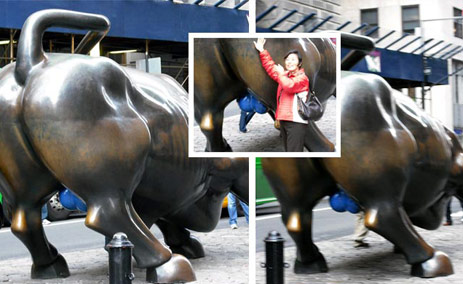
Blue Balls


I'm glad someone is still having a good time at Wall Street. Or maybe he or she means that the bull's balls have turned blue because the market is squeezing them so tight - I'll be corny and call that a "bear hug." 

Tuesday, 7 October 2008

Rationality

I have a new idea, and I came up with it while sauntering across a rather deserted patch of grass in the cold, also thinking about the intellectual busy-ness with which I mounted my cycle with little sleep and little food, rode at full speed for 15 minutes, then dismounted and ran for 10 minutes to make sure that I got to tutorial on time. Mostly it was because I didn't want to upset my tutor, but partly also because I wanted to learn. It was a great time. 

Rationality - My opinion is that rationality is a social construction. Reason is simply one of many methods by which to analyze the world around us and to undertake decisions. Because rationality is constructed, I believe that in its use as a method of analysis, it is fundamentally subordinate to emotion, which is innate (to human beings and perhaps to all living things). The philosophical greats, from Socrates to Locke and their drinking buddies, overemphasized the use of reason. Locke even went so far as to say that human beings are born with some concept of rationality. That is simply not true. We are born with emotion, raw and unbridled. It is this emotion, this gut instinct, this intuition, by which we should analyze and come to decisions. I think that society ought to stop wondering what the most 'reasonable' action is, but should rather do what feels 'right'. 

There may be some questions to what I have said:
-How do you define reason / rationality, and what are their differences?
-Why do you seem to be using reason to make a rational argument against the supremacy of rationality?
-By 'right' do you imply that human beings have fully inherent and fully developed emotional mechanisms for analyzing the world and coming to decisions?

To these questions, I respond: read that paragraph, understand the idea, and think about how you feel about that idea. 

Tuesday, 23 September 2008

The Plight of Mediocrity

I was sitting in political theory class listening to idealistic, conformist-liberal brats speaking, when I thought of a new approach to analyzing the way society rewards individuals. I believe society rewards unusualness. That is, people who don't conform to the norm, both in positive and negative ways, receive some sort of overcompensation (beyond their relative contribution to society). For example, the exceptionally intelligent, beautiful, strong, captivating, etc. will have better chances of success. They have attributes which generate "awe". Then, there are those who are unusually poorly-endowed mentally, physically, emotionally etc. who fall into society's safety net. For instance, those with disabilities qualify for various forms of assistance, and the poor and unemployed can claim forms of state support. They have attributes which generate (crudely) "sympathy".

What becomes of the individual who is unexceptional in either way? They face society's great burden - to support the others. Their lives becomes vehicles by which the privileges of the have-alls and the have-nothings are sustained. For instance, it is the middle class upon which the tax burden falls in the contemporary United States. Unusually wealthy individuals and corporate entities pay very little, while enjoying similar benefits. The unusually poor cannot afford to contribute much, yet benefit from the state's welfare programs, largely funded by middle class tax-payers. Yet another example set is formed by athletics and by the exhibition of human rarities. The multi-million dollar salaries of basketball players are in a large part sponsored by the average individual watching the sport (live or otherwise). The flip-side of this coin is the fact that so-called "freakshows", popular in the early-mid part of the previous century, provided a livelihood for individuals who would have otherwise remained unemployed. There are numerous other such examples that I do not want to spend time delving into.

The more important question is why does society reward unusualness? I believe that this is the result of two fundamental human reactions: the desire to be what one is not, if 'what one is not' is seen by society as positive, and the desire to change what one is not, if 'what one is not' is perceived as negative. The assumption that a young child intently observing birds wishes that he could fly, is the simplified underlying premise behind the first part of this argument. Adult humans (unfortunately disillusioned) realize that they cannot be what they are not, hence vicariously satisfy this desire through observing exceptional members of their own species. Adults try to support especially disadvantaged individuals because altruism is socially observed as just. Do all 'average people' give to the mendicant? No, but society as a whole tends to. As described in the previous paragraph, the emergent result of both actions is similar.

Then, is systematic overcompensation morally right? This is a mere observation, and I prefer not to normatively analyze the world. Certain philosophers would argue that justice and morals are not absolute in their definition, but are determined by the way society behaves. Therefore, society's collective act of unequal compensation would be deemed morally right. A Rawlsian distribution paradigm approach would argue that only equality is just.

Just some thoughts and a poorly constructed argument, but I find this interesting nonetheless.
Wednesday, 3 September 2008

Recession


Recession
This is a recent photo that I took in New York. I used a composite technique, and some very basic editing. I wanted to capture the rawness of the U.S.'s current economic woes. We hear quite a lot about turmoil in the financial markets, yet the urban reality which tends to be overlooked is that more people are sleeping on the street than in the past, shops are closing, buildings are poorly maintained, cars aren't as common, and jobs are harder to come by. But I think there is beauty in the optimism of the woman's gait.

Saturday, 2 August 2008

Tomoko Sawada

She took a series of photographs of herself in booths with different costumes. I feel that the real impact lies in how each photo seems to convey an individual story, yet on a closer examination each face seems similarly (and somewhat frighteningly) plastic. 


Tuesday, 22 July 2008

Naoya Hatekayama - from the mid 90s

River - Beauty in something so disgusting? I find the series very visually stimulating, and in particular like the contrast of the murky water and pale cherry blossom tree (from 1993-1994):


Blast: Powerful and almost otherworldly - I think this series is truly a testament to man's power over nature, which isn't necessarily good (from 1995):


These series, and quite a lot of Hatekayama's work can be seen at:
L.A.Galerie Lothar Albrecht

Saturday, 19 July 2008

Miwa Yanagi

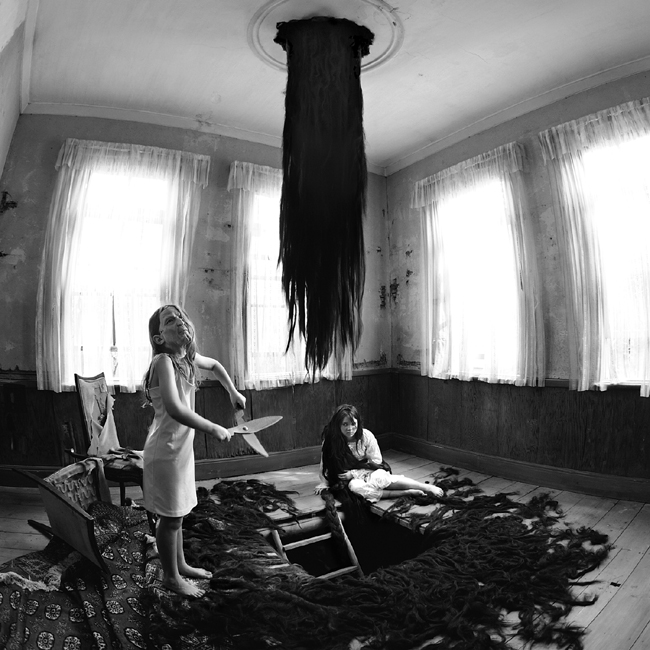
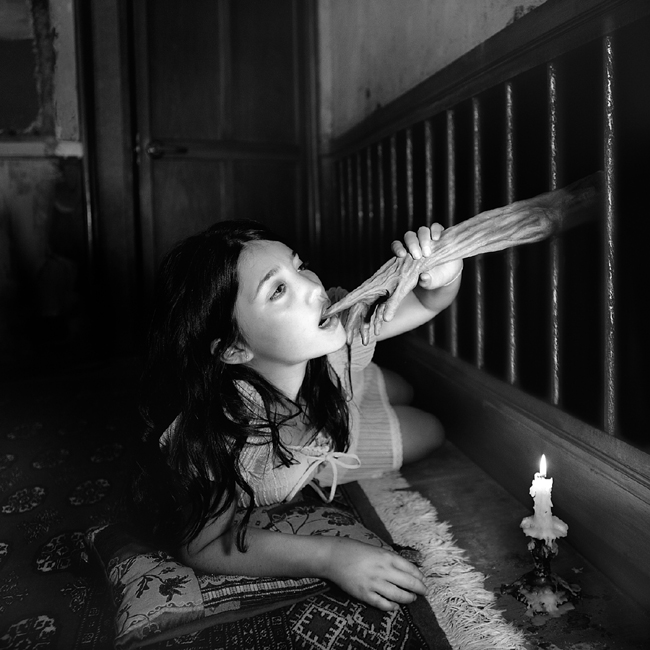
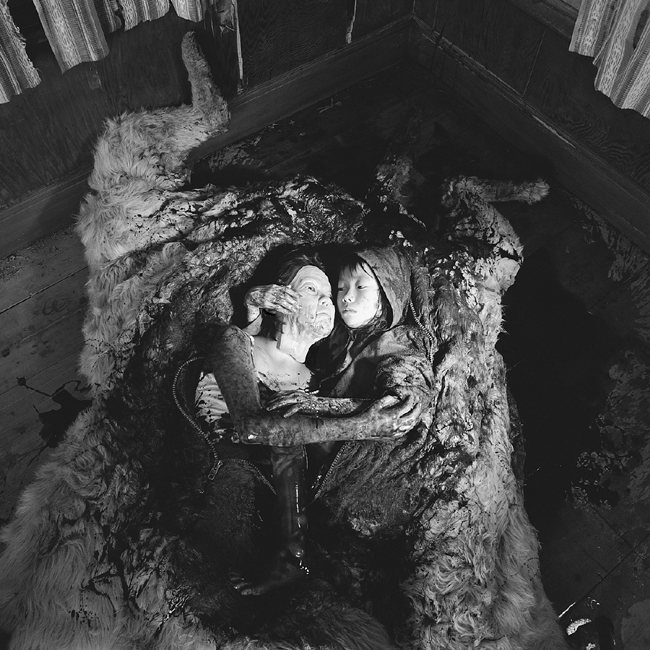
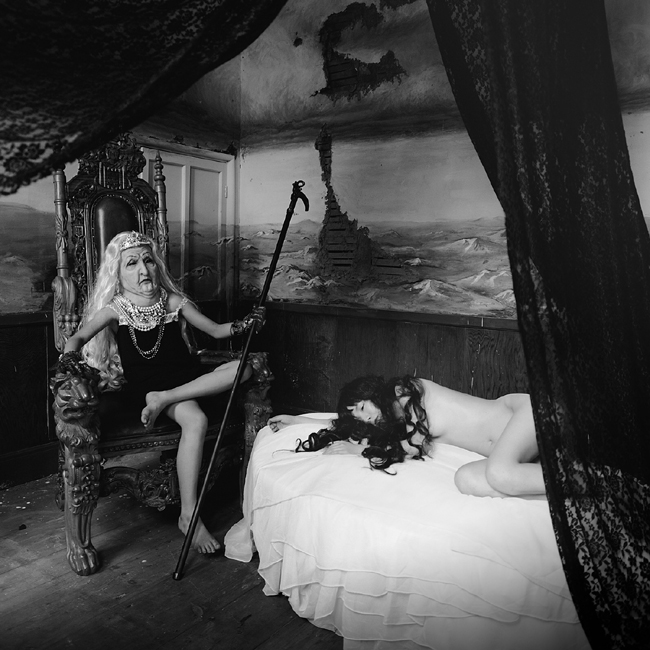
Miwa Yanagi's work (requiring quite elaborate set ups) depicts morbid, disturbing, and sexual takes on children's fairy tales.

Gelatin silver prints:


Rapunzel


Gretel


Little Red Riding Hood


Erendira


For the full collection see: http://www.wohnmaschine.de/fairytales.0.html